
Latest News
-
South Korean stocks plunge over 5% in August, as chipmakers are the main culprits
South Korean shares closed more than 5% down on Monday. The start of August was a rough one as investors sold off the heavyweight chipmakers after a record rally in the previous session. The benchmark KOSPI index fell 5.1% to 6,257.45 after surging by 18% in the previous session. The gauge, however, fell 22.2% during July for its biggest monthly decline since October 2008. The stock market in Seoul has been slashed due to a rapid winding down of leveraged bets on heavyweight chipmakers, and concerns about the durability of capital expenditures by AI hyperscalers. The record Friday rally was followed by fresh selling on the Monday after, highlighting the fragile sentiment surrounding AI investments and the outsized impact of leveraged retail betting on the heavyweight chipmakers. Samsung Electronics, and its rival SK Hynix, which together account for over half of the KOSPI Index, have shed 9% and 8,7% respectively. "Today's drop is better interpreted as a rebalancing of positions rather than a fundamental change." Billy Leung is an investment strategist with Global X ETFs Australia. He said that Korean equities are now a "high beta proxy" for global AI sentiment. The near-term path will remain volatile, given the amount of leverage in the system. However, the demand background underneath the volatility remains strong. William Bratton of BNP Paribas' Cash Equity Research in APAC says that the KOSPI volatility can be seen by the sharp swings this year. 32 of 42 daily movements of over 5% during the last decade occurred this year, as of July 31. Regulators introduced measures to limit the impact of highly volatile financial instruments. Investors remain unsure whether these measures will be enough to survive the current market slump. Bratton noted that "our discussions with investors indicate a high level of frustration" because the current market volatility is overshadowing the fundamental story. Data showed that 'July exports exceeded market expectations due to a 179% increase in semiconductor shipments. A purchasing managers survey conducted by S&P Global also revealed that factory activity was expanding at a faster pace in July, based on the export demand. Other automakers in the KOSPI were?Hyundai Motor, and Kia Corp, which is a sister company, both rose 1.3%, and fell 1.7%. According to exchange data, foreigners sold shares worth $2,826.2 billion ($1.98 billion), after selling a total amount of $9.86 trillion in July. According to a source, the won strengthened to 1,426.20 against the U.S. Dollar, but it remained below its 1,418-level reached last Thursday, after foreign exchange authorities made a rare dollar selling intervention.
-
Gold prices rise as oil prices fall after Trump delays Iran attack
Gold prices rose on Monday as oil prices dropped after U.S. President Donald Trump waited to launch a new attack on Iran, hoping for a quick deal. This helped ease concerns about inflation and rising interest rates. As of 0655 GMT, spot gold was up 0.6% to $4,063.35 an ounce. U.S. Gold Futures rose 0.1% to $4,053.70. After authorities intervened on the foreign exchange market to support yen prices, the U.S. Dollar was under pressure. Tim Waterer is the chief market analyst for 'KCM Trade. He said that gold has had a relatively positive start to the week, but the gains are still limited due to the uncertainty surrounding the oil markets and the Middle East. Trump stated that talks with Iran would take place on Monday, but he declined to give a deadline. Brent crude dropped nearly 6%. Since the beginning of the U.S. - Iran conflict, gold has been under pressure as a rise in inflation caused by war could lead central banks to increase interest rates. While bullion has traditionally been viewed as an inflation hedge, its appeal is diminished in a high interest rate environment since it doesn't yield any interest. Participants in the market will also be focusing on the U.S. employment reports that are due this week. These include the ADP Employment Report, weekly claims for joblessness, and the nonfarm Payrolls report. Waterer stated that "any renewed escalation of the Middle East, which?pushes the oil higher, or a strong NFP that reinforces the September rate-hike chances, could cap the downside." Three U.S. Federal Reserve members who dissented from the meeting last week and favored a rate increase expressed concern on Friday about the inflation remaining stuck above the Fed's target of 2% without an immediate rise in short-term borrowing rates. In a recent note, Standard Chartered analysts said that they continue to expect the gold price to recover on seasonal buying. Spot silver rose 0.9% to $58.17; platinum increased 0.2% to 1,645.89; and palladium grew 1.1% to $1.287.19.
-
Oil prices fall on hope of Iran Deal, but yen firms are still active after intervention
The oil prices fell and the?U.S. Stock futures in Europe and the U.S. rose Monday amid growing hopes for a Middle East peace agreement, while the yen strengthened to a high of three months after the U.S. Japan and the United States confirmed a joint intervention in order to support the fragile?currency. Brent crude futures fell more than 4%, to $83.88 per barrel, after U.S. president Donald Trump announced that talks with Iran would take place on Monday. He had previously called off an imminent strike on Iran in order to reach a agreement to reopen Strait of Hormuz, and resolve the impasse regarding Tehran's nuke capabilities. S&P futures increased by 0.6%, while Nasdaq Futures rose by 0.8%. European futures rose 0.8%. Asian stocks were down at the beginning of the week following a turbulent month that saw wild swings in the AI market. Investors worried about massive capital expenditure and whether they would provide returns quickly. Japan's Nikkei fell 1% while South Korea's KOSPI dropped more than 5%. MSCI's broadest?Asia-Pacific share index outside Japan fell 1%. YEN BEAR COWER FOLLOWING JOINT INTERVENTION The Japanese yen rose 0.5% to 156.49 US dollars after an abrupt move earlier in day that saw it reach its highest level since early May (155.2), putting traders on high alert for another round of intervention. Japan's Finance Ministry confirmed on Monday that the U.S. and Japan conducted a coordinated yen buying intervention, and they will not hesitate to continue. This is a rare bilateral action taken to stop the yen from falling to new 40-year-lows. Scott Bessent, U.S. Treasury secretary, said that the United States will also consider increasing the size of Federal Reserve's repurchase facility in the coming months to provide temporary dollar liquidity. He called the tool "important backstop". Matt Simpson, senior analyst at StoneX, said that Besent's remarks carry more weight than his intervention. It feels like the Japanese yen is at its lowest level for the year. "The term 'joint interventions' is rarely used in these markets, but it carries a great deal of weight." Trump said that the United States helped Japan support the yen on Sunday as a gesture of friendship and in order to aid the global economy. Tokyo's unilateral intervention between late April to early May only caused a short yen recovery, and the Bank of Japan rate hike in the month of June provided little support, underlining the challenges facing policymakers due to rising oil prices and an interest rate differential with other major economies. Data from an American regulator showed that the yen was at a 40-year low of 163.99 dollars per yen in the recent weeks, and had net short positions of approximately $12.5 billion. This is the highest amount in the past two years. Masahiko LOO, senior fixed income analyst at State Street Investment Management, said that 155 is the level to watch in the near term. It has effectively served as a market floor/resistance since the May intervention of this year. Bessent's repeated calls for the BOJ to increase interest rates and his actions have brought monetary policy into sharp focus. On Monday, the 2-year JGB rate, which is most sensitive to short-term monetary policy changes, briefly reached 1.545%, its highest level since 1995 as markets priced in an early rate increase. "Intervention could shape the next few weeks. The next few years will be shaped by BOJ normalisation and hedging flows. Loo stated that the next major move of the yen could be upwards, not downwards. Oil prices dropped, which led to lower yields on U.S. Treasury bonds. The 30-year bond yield fell 3.7 basis point to 5.238%. This is a slight decrease from the 19-year high that was reached last week. Investors were confused by the Iran War and the Federal Reserve's policy outlook in July, which caused the yield to jump 372 basis points. Reporting by Ankur banerjee from Singapore, Editing by Muralikumar Anantharaman & Jacqueline Wong
-
South Korean shares fall over 5% following record rally, as chipmakers are leading the sell-off
South Korean shares fell more than 5% Monday, kicking off the month of August in a rough?note. Investors sold off heavyweight chips makers?after a record rally during the previous session. As of 0420 GMT, the?benchmark?KOSPI Index fell as much as 5.5%. It had soared by an unprecedented 18% on Friday. The gauge, however, fell 22.2% during July and was the steepest drop in a month since October 2008. The stock market in Seoul has been slashed due to a rapid winding down of leveraged bets on heavyweight chipmakers, and concerns about the durability of capital expenditures by AI hyperscalers. The record Friday rally was followed by fresh selling on monday, which underscored the fragile sentiment surrounding AI investments and the outsized impact of leveraged retail betting on heavyweight chipmakers. Samsung Electronics, and its rival SK Hynix, which together account for more than half the KOSPI Index, both fell by 8.4% and 7.6% respectively. "Today's drop is better interpreted as a rebalancing of positions rather than a fundamental change." Billy Leung is an investment strategist at Global X ETFs Australia. He said that Korean equities are a good proxy for the global AI sentiment. The near-term path is likely to remain volatile, given the amount of leverage remaining in the system. However, the demand background underneath the volatility remains strong. William Bratton of BNP Paribas' Cash Equity Research in APAC says that the KOSPI is volatile. This year, 32 of 42 daily movements of more than 5 percent over the last decade occurred. Regulators introduced measures to limit the impact of high-volatility financial products. Investors remain skeptical that these measures will be enough to survive the current market slump. Bratton noted that "our discussions with investors indicate a high level of frustration" because the current volatility in the market is overshadowing the fundamental story. Data showed that July exports exceeded market expectations, thanks to a 179% increase in semiconductor shipments. A purchasing managers survey conducted by S&P Global also revealed that factory activity expanded at a faster pace in July due to export demand. Hyundai Motor, the sister company of Kia Corp, and other automakers were also up or down in the KOSPI. According to exchange data, foreigners sold shares worth 2,16 trillion won ($1.51billion) on Monday after selling a total of 9.86 trillion won last month. According to a source, the won strengthened to 1,429.40 against the U.S. Dollar, but it remained below its 1,418-level reached last Thursday, after foreign exchange authorities made a rare dollar selling intervention.
-
Swiss stocks: Factors to be on the lookout for on August 3.
Here are a few of the main factors that could affect Swiss stocks on Monday. BUSINESS STATEMENTS HOLCIM - AG Swiss building materials'supplier HOLCIM said?on a Sunday that it planned to sell its Philippines business in a deal worth at least $807 millions to China Huaxin Building Materials. NOVARTIS FDA approves 'pluvicto' for PSMA+ metastatic prostate cancer with hormone-sensitive metastatic (MHSPC). This could be a?new standard in metastatic disease. Analysts' Views COMET HOLDING AG: Berenberg increases target price from CHF 480 to CHF 490- COMET?HOLDINGAG: JP Morgan increases?target to?CHF565 from?CHF500 BUCHER INDUSTRIESAG: Berenberg reduces target to CHF360 from CHF366 ECONOMY Swiss July CPI is due at 0630 GMT. Swiss July Manufacturing PMI is due at 0730 GMT. SNB sight deposits due at 0800 GMT. (Reporting by ?Zurich newsroom and Gdansk newsroom) |1|For Top ?News in ?a multimedia Web format on Eikon visit: https://bit.ly/2NDFd6g FOR RELATED PRICES, ?NEWS AND OTHER TOPICS, ?DOUBLE-CLICK ON: Daily Swiss stock market report in German All SMI ?constituent stocks DJ STOXX index Top ?10 STOXX sectors Top ?10 EUROSTOXX sectors Swiss mid-cap index Swiss all-share index Swiss market digest Sector overview All Swiss news Swiss research news All equity news SPEED GUIDES: |1|
-
The list of things to do for Yen gets longer from here
Ankur Banerjee gives us a look at what the future holds for European and global markets Tokyo's coordinated efforts to?pull the Japanese yen away from its 40-year-lows were probably the thing that was needed to?turn the tide for the frail?yen. But monetary policy?follow-through?will be required to make the move last. Japan and the United States have conducted a coordinated yen buying intervention, Japan’s finance ministry announced on Monday. This is a rare bilateral move, the first since 2011. They also warned that they would not hesitate to take additional action. The joint effort was highlighted in a photograph taken on Friday. U.S. Treasury secretary Scott Bessent revealed a "to-do list" during a Cabinet meeting, indicating he is 'contemplating U.S. purchase of Japanese yen worth $5 billion to 10 billion dollars. The Camp David notepad, which was taken over Bessent’s shoulder during a on-the-record part of the meeting, bears the highlighted words "To Do", followed by "Buy Japanese Yuen (JPY), $5-10 bil." Japan's to-do lists are likely to be longer. After Donald Trump announced that talks would take place with Iran later in the afternoon, the oil-importing nation will be hoping for a deal ending the Middle East war. Oil prices fell following Trump's remarks, but Asian stocks continued to be under pressure due to investors remaining sceptical about a deal. Analysts point out that Japan’s monetary policies?remain the critical part of the overall picture, as interest rate differentials must be narrowed for the yen's strength. This has put pressure on the Bank of Japan to raise rates and soon. The yield on the two-year JGB, which is the most sensitive to near-term policy changes, briefly reached 1.545%. This was the highest level since 1995 as markets priced in an early rate hike. Analysts believe that the sudden spike in the early Asian hours could have been another intervention. The currency was now trading at 156.54 U.S. dollars, which is well away from the July 1986 lows of 163.99. The key developments that may influence the markets on Monday are: Germany retail sales data for June and July, PMI data from France, Germany, UK, and the Euro zone. (By Ankur Banerjee, Singapore; edited by Jacqueline Wong.
-
Gold prices rise as oil prices fall after Trump delays Iran attack
Gold prices rose on Monday as oil fell after U.S. president Donald Trump held off on new attacks against Iran, hoping for a quick deal. This helped ease concerns about inflation and rising interest rates. As of 0437 GMT, spot gold rose 0.7% to $4,068.54 an ounce. U.S. Gold Futures increased 0.9% to $4 066.60. After the authorities intervened on the foreign exchange market in order to support the Japanese yen, the U.S. Dollar was under pressure. This made dollar-priced gold more affordable for buyers overseas. Tim Waterer is the chief market analyst at KCM Trade. He said that gold has had a "relatively cheery" start to the week, but the gains are limited due to the uncertainty surrounding the Middle East and oil markets. Trump stated that talks with Iran would take place on Monday, but declined to give a deadline. Oil prices dropped more than 5%. Since the beginning of the U.S. - Iran conflict, gold has been under pressure as a rise in inflation caused by war could lead central banks to increase interest rates. While bullion has traditionally been regarded as a hedge to inflation, it loses its appeal in an environment of high interest rates because it doesn't yield any?interest. The market participants will also be focusing on the U.S. employment reports that are due this week. These include the ADP Employment Report, weekly 'jobless claims' and the nonfarm Payrolls Report. Waterer stated that "any renewed escalation of the Middle East, which would push oil prices higher, or a strong NFP report, which would reinforce the September rate-hike chances, could cap the upside." Three U.S. Federal Reserve members who dissented from the meeting last week and favored a rate increase expressed concern on Friday about the inflation remaining stuck above the Fed's target of 2% without an immediate rise in short-term borrowing rates. In a recent note, Standard Chartered analysts said that they continue to expect the gold price to recover on the back of seasonal buying. Silver spot rose 1.4%, to $58.46. Platinum rose 0.5%, to $1650.63. Palladium rose 1.6%, to $1293.50. Ashitha Shivaprasad reports from Bengaluru, and Subhranshu sahu edits. Sherry Jacob Phillips.
-
Officials say that Indonesia has resumed exports of minerals with rare earth byproducts.
Indonesia has resumed the export of minerals which may contain rare earth elements in their byproducts. This follows complaints from metals industries about delays due to mandatory rare earth content inspections. The testing of rare earth elements (REEs) in minerals such as bauxite and alumina has caused delays to the exports. Exporting rare earth elements as primary products is in fact prohibited. In a press briefing, Dudung Abdurachman, chief of staff to the president, said that it does not apply automatically to REEs found in products and derivatives as byproducts or accompanying elements. Dudung Abdurachman, the presidential chief of staff, said that this announcement was "a transitional guideline for exporters, surveyors and customs authorities" while the government prepared regulations to address issues surrounding rare earth content exports. He said that the government would'meet on Monday with stakeholders to discuss concentration limits for each of the elements, laboratory testing methods and verification mechanisms, as well as guidelines for issuing surveys. Surveyors are reluctant to issue export documents due to the lack of guidelines. They fear prosecution following a recent investigation into mineral shipments that allegedly contained REEs. Indonesia is one of the largest exporters of minerals. However, its production of rare earths remains small, and occurs mainly as byproducts. The government did not specify how much rare earth may be in other minerals. Dudung stated that PT Sucofindo which carries out 'the mandatory testing program' will soon release 85 surveyors reports that have been delayed because they showed traces of rare Earth elements. Nickel industry group FINI stated last week that businesses are waiting for around 120 surveyors reports. Previously, there were just a little over 100 ships that were delayed. Dudung stated that the ships are now able sail. He said that the companies exporting alumina and copper cathode as well as nickel-derived products are the main recipients of delayed surveyor reports. Dudung said that exports of mining product containing radioactive elements could be permitted as long as they "are classified as naturally occurring material" and meet safety tests and requirements as per regulations. Indonesia, a country rich in minerals, has a desire to develop its own rare earth industry. President Prabowo Subianto formed a mineral agency that will oversee the effort. The mineral agency announced earlier this year that it had identified eight blocks with a high potential for rare earths and would conduct research on their processing technology. (Reporting and writing by Stefanno Sulaiman; Bernadette Cristina, Ananda Terresia, editing by John Mair, David Stanway, and Fransiska Naangoy)
Goldman Sachs increases oil price forecasts for Q4 2026
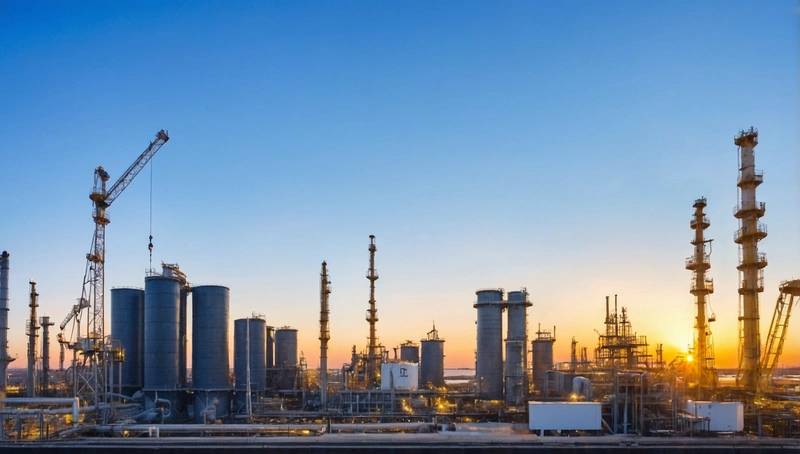
Goldman Sachs has raised their Brent and 'West Texas Intermediate crude' forecasts for the fourth quarter 2026 by $6 each, to $60 and $56 respectively, citing lower than expected OECD stocks. However, it still assumes that there will be no disruption in supply due to Iran and continues to maintain its view on a 2026 excess.
In a Sunday note, the 'bank stated that it expected OPEC+ would begin to gradually increase?production during the second quarter 2026 due to the fact that OECD inventories had not yet built.
The bank's 2026 forecast of a surplus of 2.3 million barrels a day (bpd) was maintained, assuming that there would be no major disruptions in supply and that Russia-Ukraine will not reach peace.
The bank's 2026 surplus is a result of a 0.2 million bpd downward revision to the supply and demand due to softer growth in Asia.
Goldman expects that the downside risk for Brent will be $5 and for WTI $8 in the fourth quarter of 2026, depending on whether sanctions relief for Iran or Russia could accelerate landed stock building and increase supply?in the long term.
The firm expects Brent and WTI prices to be $65 and $60 respectively in 2027, and to rise to $70 & $66 by December 2027 due to a slowdown in supply growth and solid demand. (Reporting and editing by Thomas Derpinghaus in Bengaluru)
(source: Reuters)